Distorted Face Emoji Trends 2025 Big Eye Wide Eye and the 30 Percent Drop of 🥀
Emoji trends move fast because they follow emotion, not grammar. One month a symbol feels perfect for group chats, reaction posts, and quote tweets. A few months later, it can feel overused, dated, or tied to a joke that already peaked.
That is exactly what makes 2025 such an interesting year for emoji culture. The “distorted face” emoji style is everywhere, partly because it captures a very current mood: overstimulated, caught off guard, slightly unwell, and still online. At the same time, the 🥀 wilted rose emoji, once a reliable shorthand for heartbreak and dramatic sadness, hit a usage peak in June 2025 before sliding into a reported 30 percent decline compared with last year.
Both trends point to the same bigger shift. People are using emojis less like decoration and more like emotional captions. The winning emoji is no longer always the prettiest one. It is the one that best says, “This is exactly how that felt.”
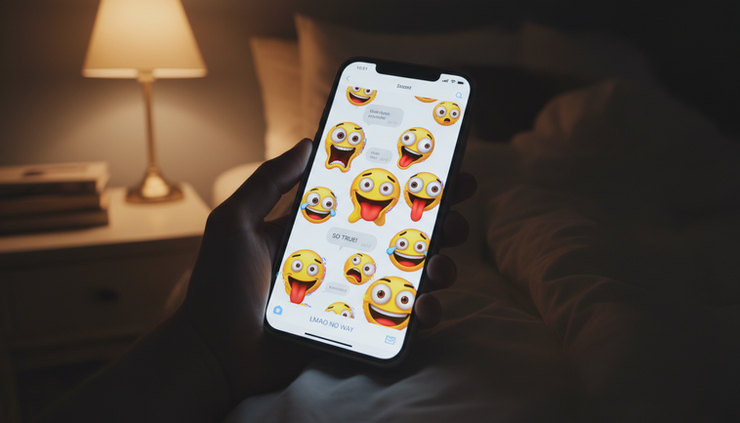
The distorted face emoji became the face of digital overload
The distorted face emoji is not just one clean category. People use the phrase to describe a family of warped, stretched, shocked, melting, cross-eyed, or exaggerated facial expressions. Some versions come from official emoji keyboards. Others come from stickers, custom server emojis, reaction images, or platform-specific meme faces.
That messy definition is part of the appeal.
The distorted face works because online emotion is rarely tidy. A simple smiley can feel too calm. A crying emoji can feel too direct. A skull emoji can feel too familiar. The distorted face sits somewhere in between. It says:
I am overwhelmed, but joking.
I am shocked, but not seriously harmed.
I am laughing, but also uncomfortable.
I saw something strange and need everyone to know.
In 2025, that emotional range matters. Short-form video, group chats, fandom spaces, gaming communities, and comment sections reward quick reactions. A distorted face can replace a full sentence because the expression already contains the punchline.
A post about a chaotic celebrity clip might get a distorted face reaction. So might a friend’s terrible dating story, a weird AI-generated image, a glitchy video, or a screenshot of an awkward message. The face says, “I do not have the words, but this is my face right now.”
That is why searches around the trend have become more descriptive. People do not always know the name of the emoji they want. They search for the feeling or the look.
Related searches like “big eye emoji” and “wide eye emoji” show how people hunt for expressions visually. They are not asking for a Unicode name. They are trying to find the face that matches a reaction: stunned, frozen, suspicious, nervous, or deeply confused.
This is a major change in how emoji discovery works. In older emoji use, people searched by object or emotion, such as “heart emoji,” “crying emoji,” or “laughing emoji.” Now they search by facial features. Big eyes. Wide eyes. Crooked mouth. Weird face. Melted face. Distorted face.
The emoji keyboard has become less like a dictionary and more like a mood board.
Wide eyes explain why the trend spread so quickly
The rise of the distorted face connects closely to the popularity of wide-eyed expressions. Big eyes are one of the easiest visual shortcuts for heightened emotion. They can signal fear, surprise, innocence, obsession, disbelief, or a joke that is about to go too far.
That flexibility makes wide-eyed emoji styles perfect for modern posting.
A wide eye emoji can read differently depending on context:
Context | What the expression often means |
A shocking screenshot | “I cannot believe they said that.” |
A food video | “I need this immediately.” |
A horror clip | “This is terrifying, but I am still watching.” |
A crush-related post | “I am trying to act normal.” |
A strange news headline | “No thoughts, just blinking.” |
The same face can feel anxious in one comment and hilarious in another. That makes it reusable, which is the main fuel behind an emoji trend.
The distorted face also benefits from how people now layer meaning. A single emoji rarely stands alone. It appears beside lowercase captions, ironic punctuation, reaction GIFs, screenshots, and audio clips. The whole package creates the joke.
For example:
“me opening the group chat after 20 minutes 😵💫”
“why did it look at me like that 👁️👄👁️”
“this update cannot be real 🫨”
“wide eye emoji energy all morning”
The face is not just a reaction. It becomes a label for a mood.
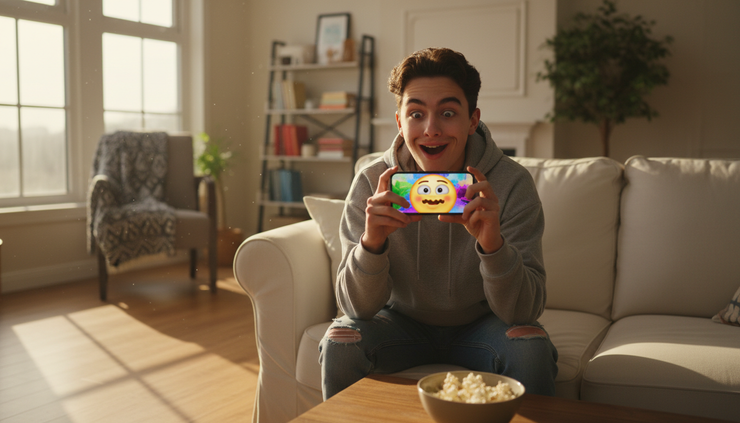
There is also a design reason for the trend. Distorted faces read well at small sizes. Large eyes, uneven mouths, tilted features, and intense expressions are easy to recognize on a phone screen. Subtle emojis can get lost in a fast comment thread. A warped expression stands out.
That matters on platforms where users scroll quickly. If an emoji makes someone pause, laugh, or tap copy, it has a better chance of spreading.
The 🥀 wilted rose peaked in June 2025, then lost momentum
The 🥀 wilted rose emoji has long carried a dramatic kind of sadness. It can mean heartbreak, grief, failed romance, emotional exhaustion, poetic despair, or the end of something beautiful. It is softer than a broken heart and more theatrical than a sad face.
That made it a favorite for moody captions, breakup posts, sad edits, fandom mourning, and aesthetic comments. It fit the visual language of dark filters, rainy windows, song lyrics, and black-and-red mood boards.
In June 2025, 🥀 saw a usage peak. The timing makes sense for several reasons.
June often brings emotional transitions. School years end. Graduations happen. Summer relationships start or fall apart. Music releases and fan edits often cluster around early summer. People post more memories, more endings, and more “this chapter is over” content.
The wilted rose fits that seasonal feeling. It says goodbye without spelling everything out.
It also works well with short captions:
“be safe in another life 🥀”
“we had our time 🥀”
“end of an era 🥀”
“June always does this 🥀”
The emoji adds drama, but not too much explanation. That can feel useful when people want to signal sadness while keeping the details private.
Still, after that June high point, the emoji’s broader usage has reportedly fallen 30 percent since last year. That kind of drop does not mean 🥀 disappeared. It means the symbol has lost some of its everyday power.
There are a few likely reasons.
The wilted rose became too attached to one mood
Some emojis survive because they can shift tones. The distorted face can be funny, awkward, shocked, or anxious. The wilted rose has a narrower emotional lane.
It is beautiful, but specific. Once an emoji becomes strongly tied to heartbreak or tragic edits, people may hesitate to use it casually. It can make a small disappointment feel too dramatic.
If someone posts “my coffee spilled 🥀,” that can be funny because the drama is exaggerated. But if everyone uses it that way for months, the joke fades.
Sad-posting aesthetics changed
Online sadness has styles. For a while, romantic gloom used symbols like black hearts, broken hearts, wilted flowers, rain, cigarettes, and lyric snippets. In 2025, many users have moved toward stranger, more absurd emotional expression.
Instead of using 🥀 to show heartbreak, they might use a distorted face, a skull, a melting face, or a wide-eyed stare. The emotion becomes less elegant and more chaotic.
That reflects a broader shift from polished sadness to messy honesty. A wilted rose says, “I am tragically heartbroken.” A distorted face says, “I am processing this badly in real time.”
The second tone fits many 2025 conversations better.

Users are rotating away from overfamiliar symbols
Emoji fatigue is real. When a symbol becomes too common, it starts to feel less personal. The wilted rose had a strong run because it was easy to understand and emotionally rich. That same strength made it easy to overuse.
Once an emoji becomes predictable, trend-conscious users often move on. They look for symbols that feel fresher or more private. Sometimes that means older emojis return with new meaning. Sometimes it means users combine symbols in odd ways, such as pairing a blank stare with a flower, or using an unrelated object as an inside joke.
The decline of 🥀 may also reflect a move away from single-symbol sadness. Instead of one wilted rose, users might build a whole emotional scene with multiple emojis, text style, and audio.
Emoji trends now rise through search, remixing, and emotional accuracy
The most interesting part of 2025 emoji culture is how trends form. They do not only come from official emoji releases. They grow through search behavior, reaction habits, meme templates, and the need for emotional precision.
When people search “big eye emoji” or “wide eye emoji,” they reveal a simple truth: users often know the expression before they know the symbol. They want an emoji that looks like their reaction.
That makes search terms a powerful signal. A rising search phrase can show that people are trying to name a mood that already exists in their chats. The phrase may start clumsy, but the trend behind it can be strong.
The distorted face is a perfect example. It is less about one official character and more about a category of expression. Users may mean 🫨, 😵💫, 🫠, 😳, 😬, a custom emoji, or a meme face depending on the platform. What unites them is emotional distortion.
In other words, the face looks overwhelmed because the user feels overwhelmed.
That emotional accuracy helps explain why the trend travels across platforms. A distorted face can work in:
TikTok comments reacting to chaotic clips
Instagram captions about awkward moments
Discord servers using custom reactions
X posts responding to breaking pop culture moments
Group chats where one emoji replaces a paragraph
The format changes, but the feeling stays the same.
The wilted rose shows the other side of that cycle. It still has strong meaning, but its meaning may have become too familiar. A 30 percent drop suggests that users are not abandoning emotional emojis. They are changing which emotions feel current and how they want to perform them.
Right now, irony and distortion are winning more often than elegance.
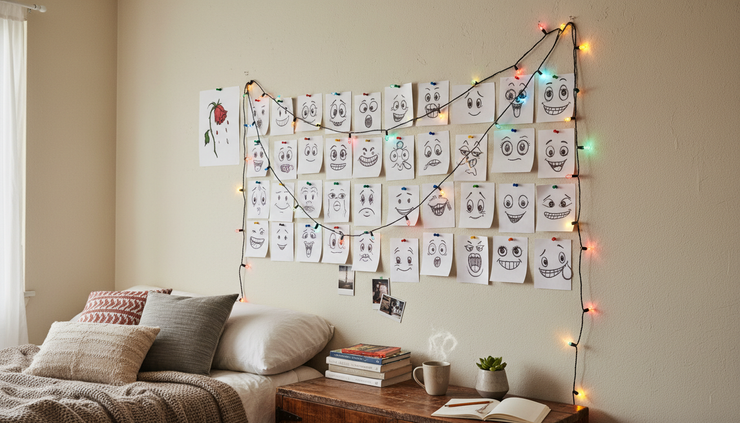
What these 2025 emoji shifts say about online communication
The rise of distorted face emojis and the cooling of 🥀 point to a bigger change in how people talk online. Emojis are no longer just emotional punctuation. They are tone control.
That matters because short messages can be hard to read. A reply like “sure” can sound friendly, annoyed, cold, or distracted. Add the right emoji, and the meaning changes. Add the wrong one, and the message can feel off.
In 2025, users seem drawn to emojis that admit mixed feelings. The distorted face says, “I am laughing, but this is a lot.” The wide-eyed look says, “I am interested, scared, and confused at the same time.” These expressions match the speed and weirdness of online life.
The wilted rose still has a place. It remains useful when people want beauty, grief, romance, or finality. The June 2025 peak shows it can still surge when the moment fits. But the 30 percent decline suggests that its default emotional style has lost some ground.
The key lesson is simple: emoji trends do not rise because a symbol is new. They rise because a symbol feels exact.
Right now, exact means strange faces, big eyes, nervous energy, and reactions that look a little broken. The most shared emoji is often the one that makes someone think, “Yes, that is the face I made.”
For anyone watching social media trends, the next big emoji may already be hiding in search behavior. Look for clumsy phrases, visual descriptions, and repeated attempts to name a feeling. “Big eye emoji” and “wide eye emoji” are not just search terms. They are clues.
The symbols may change, but the pattern stays the same. Online language keeps moving toward faster, sharper, more expressive reactions. In 2025, the distorted face owns that moment, while 🥀 reminds us that even the most poetic emoji can fade when the mood changes.


This post is such a fascinating dive into the evolution of emoji trends! I never thought about how much our visual expressions reflect cultural shifts. The insight on Poor Bunny game and its quirky appeal really hit home—thanks for sharing this!