No Limit to the Larp Meaning and Why It’s Trending
“No limit to the larp” is internet slang for someone committing fully to a fake persona, bit, aesthetic, or role. They are not just pretending. They are maxing out the act.
The phrase connects two ideas:
LARP Originally means live action role-playing.
No limit Slang for taking something as far as possible.
So when people say “no limit to the larp,” they mean the performance has no ceiling. The person keeps playing the role harder, longer, and more seriously than expected.

What larp means now
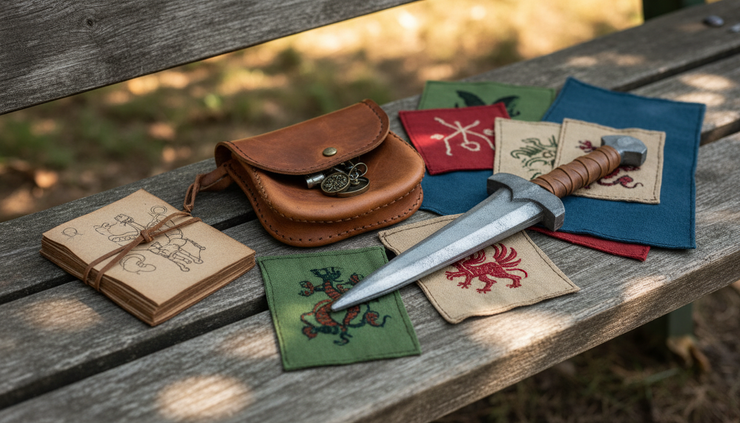
LARP stands for live action role-playing. In the original sense, people dress up and act out characters in a physical setting. Think fantasy games, foam swords, quests, rules, and costumes.
Online, the word changed.
Now “larp” often means pretending to be something you are not, usually in a way that feels staged or too committed. It can be playful. It can also be an insult.
Someone might get called a larp if they:
Act like an expert with no real experience
Copy a subculture for attention
Build a whole identity around an aesthetic
Talk tough online but avoid real consequences
Perform a lifestyle they barely live
The verb form is larping. It means doing the act.
Example:
“He is larping as a finance guy because he bought one vest and started saying ‘market cycles.’”
That does not mean he joined an actual role-playing game. It means he is acting out a type.
This is why people searching for “performative” also search for “larp,” “larping,” and “larping meaning.” The words now overlap. Both point to behavior done for display.
But there is a difference.
Performative means someone is doing something to be seen doing it. The focus is on display.
Larping means someone is acting out a role. The focus is on the character, persona, or fantasy.
A person can be both. A performative person may be larping as the kind of person they want others to believe they are.
What “no limit to the larp” means
“No limit to the larp” means the role-play keeps escalating.
It describes a person who does not stop at a small affectation. They build the whole package. Clothes, language, habits, opinions, taste, posture, backstory, all of it.
The phrase works because it sounds funny and blunt. It treats identity performance like a volume knob turned all the way up.
A basic larp might be:
Wearing hiking gear for a walk around the block
Talking like a film critic after watching three classics
Posting like a monk after one quiet weekend
Dressing like a cowboy with no interest in horses
Acting like a political strategist after reading headlines
“No limit to the larp” is the extreme version.
That person does not just buy the jacket. They change their vocabulary. They take moody photos. They pick a new set of heroes. They correct people. They imply they have lived this way forever.
The phrase can be used with humor:
“He bought one cast iron pan and now he cooks over fire in the rain. No limit to the larp.”
It can also be used as criticism:
“She keeps pretending to be working class for aesthetic points. No limit to the larp.”
Tone matters. Among friends, it often means “you are really committing to the bit.” In arguments, it means “your whole identity is fake.”
Why “no limit to the larp” is trending
The phrase fits the current internet mood. People are more aware of performance now. They notice when identity looks packaged.
Search interest around “performative” helps explain the rise. If people are already asking what performative behavior means, they will also run into “larp” and “larping.” The words live in the same zone.
People are tired of over-curated identities
Online identity used to be about posting highlights. Now it is often about building a character.
Someone can become:
The wellness person
The finance person
The cottagecore person
The blue-collar cosplay person
The mysterious reader person
The soft life person
The trad life person
The chaos gremlin person
The “I am above all trends” person
Some of these are real interests. Some become costumes.
“No limit to the larp” gives people a quick way to name the moment when an interest turns into a full performance.
It is not the same as having a hobby. A hobby does not need an audience. A larp usually wants one.
“Performative” became a common insult
“Performative” once appeared most often in discussions about politics, activism, and social behavior. Now people use it for almost anything that feels staged.
A person can get called performative for:
Reading in public in a way that feels posed
Posting gym content with moral lectures
Turning every meal into a personality trait
Using niche taste as social proof
Copying a working-class look as fashion
Acting helpless or hyper-competent for attention
That does not mean every visible habit is fake. People can enjoy things and share them.
The insult lands when the action feels aimed at approval, status, or a desired image. “Larping” adds a sharper edge. It says the person is not only performing. They are playing a role.
The phrase is easy to remix
Good slang spreads when it is short, flexible, and funny. “No limit to the larp” checks those boxes.
It can attach to many situations:
“No limit to the grindset larp”
“No limit to the cowboy larp”
“No limit to the tortured artist larp”
“No limit to the minimalist larp”
“No limit to the philosopher larp”
The phrase also works because it sounds like a caption. It has rhythm. It can sit under a photo, reply, meme, or quote without much setup.
The internet loves calling out fake authenticity
A strange thing happened online. Authenticity became another style.
People now perform being “real” with the same care others use to perform luxury or taste. Messy rooms, casual outfits, unfiltered thoughts, and low-effort posts can still be staged.
That makes “larp” useful. It cuts through the claim.
If someone says, “I am just being authentic,” a critic can say, “This is an authenticity larp.”
Harsh, but clear.

How to use the phrase without sounding lost
Use “no limit to the larp” when someone takes a persona far beyond casual interest.
It works best when the role is obvious.
Good examples:
“He watched one wilderness survival video and now owns five axes. No limit to the larp.”
“She discovered old money style last week and now talks like a boarding school admissions brochure. No limit to the larp.”
“He is larping as a tortured poet, but he only writes captions.”
“They are doing a monk larp because they deleted one app.”
Bad examples:
Calling every hobby a larp
Using it when someone has real experience
Using it as a lazy insult for any style you dislike
Punching down at people who just enjoy costumes, fandom, or role-play
The phrase works because it tags a gap between image and reality. If there is no gap, the joke falls flat.
A person who camps every weekend is not larping as outdoorsy. They are outdoorsy.
A person who loves fashion is not automatically larping. Fashion is a real interest.
A person doing historical reenactment is not fake for wearing a costume. That is the point.
The insult makes sense when someone claims status, depth, hardship, expertise, or belonging they have not earned.
LARP is not always negative
The original meaning is not an insult. Live action role-playing is a real hobby. People use creativity, rules, acting, worldbuilding, and teamwork. Many players take it seriously because the game is the point.
The slang meaning moved away from that. Online, “larp” often means fake identity.
Both meanings exist at the same time.
Context tells you which one matters.
If someone says, “I’m going to a LARP this weekend,” they probably mean the hobby.
If someone says, “He is larping as a revolutionary,” they mean he is performing a role.
If someone says, “No limit to the larp,” they mean the role-play has become extreme.
Why “larping meaning” keeps coming up with “performative”
The search pattern makes sense. People see one slang word, then follow the chain.
They may see “performative” in a post about dating, politics, reading, fitness, fashion, or masculinity. Then someone in the comments says “larp.” Then another person says “no limit to the larp.”
The terms form a ladder:
Term | Plain meaning | Example |
Performative | Done to be seen | Posting a book mainly to look smart |
Larp | Acting out a role | Pretending to be a scholar after reading one essay |
Larping | Continuing the act | Building a whole scholar persona online |
No limit to the larp | Taking the act too far | Dressing, talking, posting, and judging others through that fake persona |
This also explains why the phrase has spread beyond gaming circles. It is no longer about fantasy battles. It is about identity.
Modern slang often turns niche words into social tools. “Larp” did that. It moved from a specific hobby to a broad way to call out pretend behavior.
The newer phrase adds exaggeration. It says the act is not minor. It is committed.
The role of “performative” in the trend
“Performative” is the serious word. “Larp” is the internet word. “No limit to the larp” is the meme version.
They all point to a culture where people watch each other closely.
That can be useful. It helps people spot fake expertise, fake allyship, fake humility, and fake struggle.
It can also become annoying. If every action gets labeled performative, then sincerity becomes impossible to prove. Someone reads a book in public and gets judged. Someone dresses with intention and gets judged. Someone changes their lifestyle and gets judged.
The best use of the word needs a real reason.
Ask a simple question:
Is this person practicing something, or performing a role for status?
That line is not always clear. Still, it helps.
Buying running shoes and training for a race is practice. Wearing running gear to signal discipline while never running may be a larp.
Learning to cook is practice. Posting every meal as proof of moral superiority may become performative.
Enjoying old clothes is taste. Pretending to have inherited an aristocratic life can become a larp.
The phrase calls out the second version.

The takeaway
“No limit to the larp” means someone is taking a fake persona, aesthetic, or role as far as it can go. It comes from LARP, live action role-playing, but the internet version means staged identity more than fantasy gaming.
The phrase is trending because people are focused on performative behavior. They want words for the gap between who someone is and what they are trying to look like.
Use it for overcommitted acts, not real hobbies. A costume can be fun. A style can be sincere. A new interest can be real.
The phrase lands when the performance takes over and the person keeps pushing the role past belief. That is when there is truly no limit to the larp.


Comments